



A home espresso machine is something you buy to keep for years. That is why this buying guide does not start from the...
-
 How to choose a home espresso machine: our buying guideRead more10/21/2026
-
 ECM Mechanika Max II: all the new featuresRead more
Among home espresso machines featuring a heat exchanger system, ECM has renewed one of its most popular models with...
10/07/2026 -
 Are you a cappuccino lover? Here are the coffee machines we recommendRead more
If cappuccino is your favorite drink and you regularly prepare milk-based beverages, choosing the right coffee...
09/17/2026 -
 Rocket Appartamento 2.0: the evolution of an iconic espresso machineRead more
The Rocket Appartamento 2.0 marks a new chapter for one of the best-known and compact espresso machines in the Rocket...
09/07/2026 -
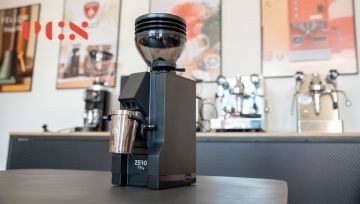 Eureka Mignon Zero 55S: the next evolution of the single dose coffee grinderRead more
Designed with home baristas in mind, the new Eureka Mignon Zero 55S builds on the success of the original Mignon Zero...
08/27/2026 -
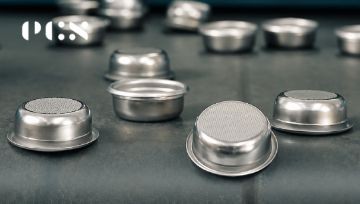 How to Choose the Right IMS Filter BasketRead more
Choosing the right IMS filter basket may seem confusing at first. In reality, every part of the code represents a...
08/10/2026 -
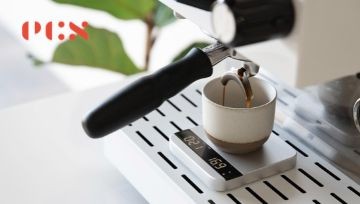 5 Espresso Accessories That Can Actually Improve Your Coffee StationRead more
The right espresso accessories can improve extraction consistency, streamline your workflow, and help you pull better...
07/23/2026 -
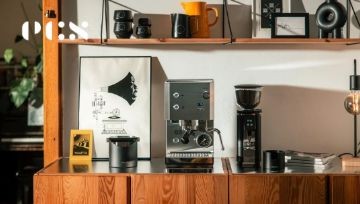 Profitec GO 2.0: The Benchmark Entry-Level Single Boiler Gets UpdatedRead more
With the new Profitec GO 2.0, Profitec has introduced a range of thoughtful upgrades that make an already excellent...
07/13/2026 -
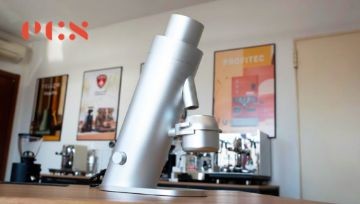 LAGOM P80: Single-Dose Grinding Meets Professional-Level PerformanceRead more
Option-O has long been a benchmark in the world of single-dose grinders, and with the new Lagom P80, the company has...
06/22/2026 -
 Summer Coffee: 3 Refreshing and Easy Recipes to TryRead more
These are timeless classics that you’ve probably heard of (or perhaps already tasted), but they never go out of style...
06/08/2026
Blog categories
Search in blog
Archived posts
How to choose a home espresso machine: our buying guide
A home espresso machine is something you buy to keep for years. That is why this buying guide does not start from the technology but from you: what you drink, how much milk you steam, how much space and how much time you have. By the end you will know whether a single boiler, a heat exchanger or a dual boiler suits you, and what else you need besides the machine.
We have already covered how the different designs work, in our article on single boiler, dual boiler and heat exchanger machines and in our guide to the different types of group heads. This guide covers the order of the questions to ask yourself before you choose a home espresso machine; answer them one at a time and you will reach the right machine faster than by comparing spec sheets.
1. What do you drink: straight espresso or milk drinks?
This is the most important question, because it decides the type of machine. If you drink mostly espresso and only make the odd cappuccino, a single boiler will serve you well. It has one boiler for both brew water and steam: to steam milk it heats up to steam temperature, then it has to come back down to brew temperature. For one cappuccino in the morning that is no problem; for four in a row it is.
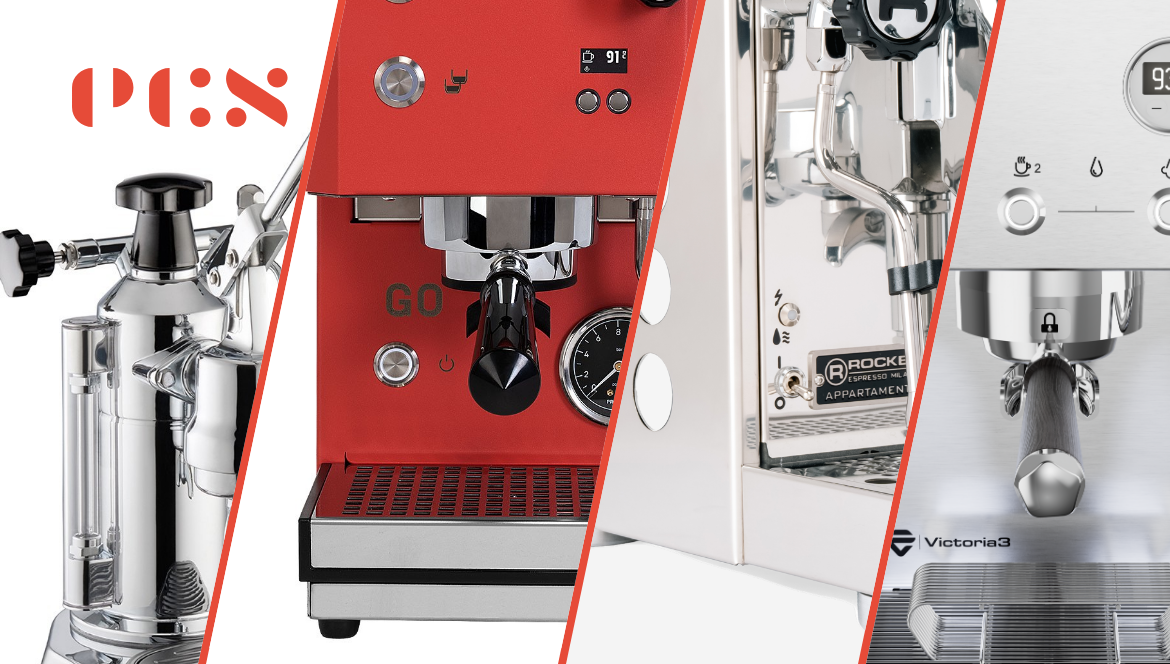
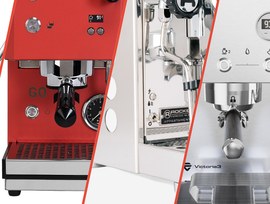
A good example is the Profitec GO 2.0: a 0.3L brass boiler with PID temperature control, a 58mm ring brew group, selectable pre infusion and a steel body just 21cm wide. It is ready in about 7 minutes and cools itself down automatically after steaming.
If what draws you to espresso is experimenting, have a look at the Lelit Victoria3. It is also a single boiler, but it runs pressure profiles: five steps with adjustable pressure and duration, plus two factory profiles on the coffee buttons, “Lever Shot” for medium and dark roasts and “Modern Shot” for medium and light ones. With the Pagaia you can also adjust pump power by hand during the shot.
2. How much milk? Dual boiler or heat exchanger
Once cappuccinos and flat whites become part of your day, you want to brew and steam at the same time. Both heat exchangers and dual boilers can; the difference is how they manage brew temperature.
In a heat exchanger (HX), one large boiler stays at steam temperature all the time and the brew water is heated as it passes through an exchanger inside it. The Rocket Appartamento 2.0 is a typical example: a 1.8L copper boiler with heat exchanger, an E61 group with natural pre infusion, built by hand in Milan and deliberately simple, with no PID and no shot timer.
Traditional heat exchangers often need a short cooling flush before the shot to bring the group to the right temperature. Newer models handle this electronically: the ECM Mechanika Max II measures temperature right at its heated E61 group and holds it with PID, adjustable from 90 to 95°C, with no cooling flush.
In a dual boiler, each job has its own boiler and its own temperature control, so you set brew and steam temperatures independently. It pays off if you brew different coffees at different temperatures or often make milk drinks for several people. The Profitec Move 2.0 shows that a dual boiler does not have to be big: a 0.27L coffee boiler, a 0.75L steam boiler, ready in about 7 minutes. On days when you only want espresso, switch the steam boiler off and it works as a single boiler.
Our rule of thumb for dual boiler or heat exchanger: if you steam milk every day and want a machine that simply works, a heat exchanger is enough. If you want to set brew temperature precisely and change it from one coffee to the next, go for a dual boiler. The models we recommend for milk drinkers are in our picks for cappuccino lovers, and every two-boiler machine is in our dual boiler espresso machines.
3. How much space do you have?
Measure before you order, and not just the footprint. Three measurements are often forgotten:
- Height under the wall cabinet: if the water tank fills from the top or lifts out, you need clearance above the machine.
- Depth with the portafilter: the handle sticks out at the front and you need room to lock it in comfortably.
- Space for the grinder: it belongs right next to the machine, otherwise every shot becomes a walk around the kitchen.
For reference: the GO 2.0 is 21cm wide. The Appartamento 2.0 is 274mm wide and 360mm tall and, thanks to its short feet, fits under most wall cabinets. The Mechanika Max II measures 275 × 445 × 405mm, and the Move 2.0 is 355mm tall.
4. How much time do you want to spend?
Time goes into three things: heating up, making the drink and looking after the machine.
Heating up
An espresso machine needs a few minutes before boiler and group are stable. The GO 2.0 and the Move 2.0 are ready in about 7 minutes, the Mechanika Max II with its heated group in about 12. With programmable on and off times, as on the GO 2.0 and the Mechanika Max II, the machine is already warm when you walk into the kitchen in the morning.
Making the drink
Grind, dose, distribute, tamp, pull the shot, steam the milk: a cappuccino on an espresso machine takes a few minutes, and for many people that is exactly the appeal. The more the machine does for you, the less you have to correct. The Move 2.0, for example, paired with a compatible Bluetooth scale, stops the shot as soon as your target weight is in the cup (Brew-by-Weight).
At the other end is the lever machine. On the La Pavoni Europiccola, made since 1961, you build the pressure yourself with the lever; its 0.8L boiler is enough for 8 espressos in a row. It takes practice, and it is a machine for people who want the ritual, not the shortcut.
Looking after it
Every espresso machine needs care: keep the portafilter and shower screen clean, clean the group regularly and descale according to your water hardness. Some machines help: the GO 2.0 has an automatic group cleaning cycle and a guided descaling program, and the Move 2.0 reminds you when to change the filter, clean and descale.
5. Budget: think in tiers, not in euros
Prices change, the logic behind them does not. We think in three tiers:
- Entry: compact single boilers with PID, for espresso and the occasional milk drink.
- Mid range: heat exchangers with an E61 group and compact dual boilers, for daily espresso and milk drinks.
- Top tier: dual boilers with extensive temperature and profile control, some with a rotary pump and plumb-in option.
Two pieces of advice. First: budget for the grinder from the start. In our experience a simple machine with a good grinder makes better espresso than an expensive machine with a weak one. Second: buy for your routine, not for the spec sheet. If you only make cappuccino at weekends, you do not need a dual boiler. If you are starting on a smaller budget, you will find specific models in our selection for getting started.
Rotary or vibration pump?
It is a common question, but it rarely decides things on its own. A vibration pump is found, for example, in the Appartamento 2.0, the Move 2.0 and the Victoria3. The Mechanika Max II has a rotary pump, which runs from the 3L tank or straight from the water mains. On some models the plumb-in option depends on the pump: the Rocket Giotto and Mozzafiato FAST can only be plumbed in on the rotary pump version.
The grinder matters as much as the machine
No espresso machine can make up for an inconsistent grind. For espresso you need a grinder that grinds fine and evenly and adjusts in small steps, because even a small change in grind size changes the shot time and the taste in the cup. Pre-ground coffee is not the answer: you can no longer adjust the grind.
Whether flat or conical burrs suit you better is explained in our article on flat and conical burrs. Our selection is in coffee grinders.
What you need besides the machine
An espresso machine comes with a small kit. Some of it may already be in the box: the Move 2.0, for example, comes with a tamper, a blind basket and a cleaning brush.
- Grinder: the most important purchase after the machine.
- Scale: to weigh the ground coffee and the espresso in the cup, so you can repeat a recipe.
- Tamper: matched to your portafilter diameter, 58mm on the GO 2.0 for example.
- Milk jug: if you steam milk.
- Water: water hardness decides how often you need to descale. More on this in More flavor, less limescale.
- Cleaning: a blind basket, group head cleaner and a brush.
The accessories that really make life at the coffee station easier are collected in 5 espresso accessories that can improve your coffee station.
Voltage and plugs: what to check
Many machines in our shop come in a 110 V and a 220 V version; you choose the voltage on the product page. For Europe and most of the world, take the 220 V version, built for 220 to 240 V mains. We only recommend the 110 V version in Canada, Japan, Taiwan and the United States.
Where the manufacturer states plug type and mains frequency, you will find it in the product description. The Lelit Anna, for example, comes with a type F (Schuko) plug and only works at 50 Hz. If in doubt, write to us at support@espressocoffeeshop.com before you order.
In short: which espresso machine is right for you?
- Mostly espresso, little space: a compact single boiler like the Profitec GO 2.0.
- Espresso and a taste for experimenting: a single boiler with pressure profiles like the Lelit Victoria3.
- Cappuccino every day, simple to use: a heat exchanger with an E61 group like the Rocket Appartamento 2.0.
- Lots of milk, stable brew temperature, plumb-in possible: a heat exchanger with PID like the ECM Mechanika Max II.
- Separate temperatures and control over what ends up in the cup: a dual boiler like the Profitec Move 2.0.
- The ritual comes first: a lever machine like the La Pavoni Europiccola.
Whatever you choose, budget for the grinder. You will find every model in our espresso machines. Since 1997 we have helped home baristas with this choice: if you are torn between two machines, ask us.
Related posts
-
 Understanding Espresso Machines: Single Boiler, Dual Boiler, and Heat Exchanger Models
Choosing the right espresso machine can elevate your coffee experience to new heights. At Espresso Coffee Shop we...Read more
-
 How to properly store coffee
If you, too, are a true coffee lover, you choose the varieties you like best with care and can't wait to brew a good...Read more
-
 Bottomless portafilter? Here are the aspects to be considered
The search for the perfect espresso is a long road, and there are several tools that can help achieve the perfect...Read more
-
 PROFITEC DRIVE: the home machine with professional performance
Drive is the evolution of the already highly appreciated Profitec Pro 700. Compared to the previous model, there are...Read more
-
 All about a good tamping
To make good coffee, it is important to have the right equipment, quality coffee and not only. It is also necessary...Read more