



A home espresso machine is something you buy to keep for years. That is why this buying guide does not start from the...
-
 How to choose a home espresso machine: our buying guideRead more10/21/2026
-
 ECM Mechanika Max II: all the new featuresRead more
Among home espresso machines featuring a heat exchanger system, ECM has renewed one of its most popular models with...
10/07/2026 -
 Are you a cappuccino lover? Here are the coffee machines we recommendRead more
If cappuccino is your favorite drink and you regularly prepare milk-based beverages, choosing the right coffee...
09/17/2026 -
 Rocket Appartamento 2.0: the evolution of an iconic espresso machineRead more
The Rocket Appartamento 2.0 marks a new chapter for one of the best-known and compact espresso machines in the Rocket...
09/07/2026 -
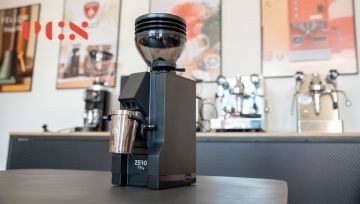 Eureka Mignon Zero 55S: the next evolution of the single dose coffee grinderRead more
Designed with home baristas in mind, the new Eureka Mignon Zero 55S builds on the success of the original Mignon Zero...
08/27/2026 -
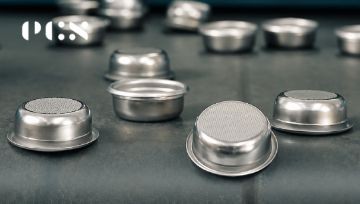 How to Choose the Right IMS Filter BasketRead more
Choosing the right IMS filter basket may seem confusing at first. In reality, every part of the code represents a...
08/10/2026 -
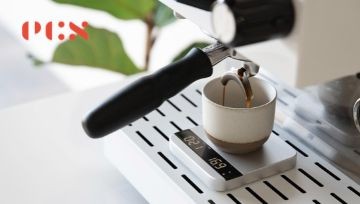 5 Espresso Accessories That Can Actually Improve Your Coffee StationRead more
The right espresso accessories can improve extraction consistency, streamline your workflow, and help you pull better...
07/23/2026 -
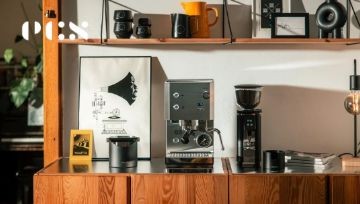 Profitec GO 2.0: The Benchmark Entry-Level Single Boiler Gets UpdatedRead more
With the new Profitec GO 2.0, Profitec has introduced a range of thoughtful upgrades that make an already excellent...
07/13/2026 -
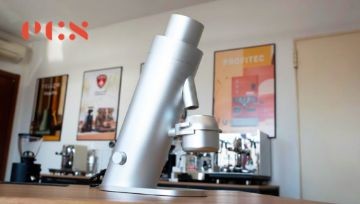 LAGOM P80: Single-Dose Grinding Meets Professional-Level PerformanceRead more
Option-O has long been a benchmark in the world of single-dose grinders, and with the new Lagom P80, the company has...
06/22/2026 -
 Summer Coffee: 3 Refreshing and Easy Recipes to TryRead more
These are timeless classics that you’ve probably heard of (or perhaps already tasted), but they never go out of style...
06/08/2026
Blog categories
Search in blog
Archived posts
How to properly store coffee
If you, too, are a true coffee lover, you choose the varieties you like best with care and can't wait to brew a good cup and enjoy its aromas. Well! Then you probably know the challenges coffee faces in staying fresh and flavorful.
To preserve the aromatic and organoleptic characteristics as long as possible, you must keep your coffee far from air, humidity, heat and light. Oxygen leads to oxidation of the fats in the bean, heat and light cause the coffee to go rancid. Humidity encourages mold.
But how can you avoid all this? Let's look at some practical steps that protect your coffee from everything that can spoil it.
Prefer coffee beans
Ground coffee is more vulnerable to degradation compared to whole coffee beans due to its larger contact area with atmospheric contaminants. This is why we always recommend choosing whole coffee beans that can be freshly ground just before brewing.
On our website you will find the coffee section of Laboratorio di Torrefazione Giamaica Caffè, among the best Italian premium coffee roasters.
Suitable quantity for consumption
Once the original package is opened, the coffee inevitably starts to deteriorate and lose flavor, little by little.
Ideally, it's always best to buy packages that contain the most appropriate amount of coffee based on your average consumption, avoiding overly large packages that would take several months to consume. Besides saving money, matching what we buy to what we actually drink also means less food waste and more sustainable consumption.
That is why you will find 0.5 kg packs of Giamaica Caffè beans on our website.
Original bag
Storing the beans in the original bag might be a good idea if the package is dark (to keep light out) and has the one-way valve, also known as the aroma-saving valve. This is very important because it allows the natural transpiration of the gases produced while keeping oxygen out of the bag.
Below is an example of a bag with aroma-saving valve.

Airtight canister
Opt for an airtight container for storage to add a touch of style to your coffee station. They are available in both glass and metal, which are both excellent materials for storing your coffee beans.
Tip: If you typically store your coffee beans in a light-exposed area, consider opting for dark or opaque airtight containers. These variants prevent light from penetrating, thereby enhancing storage conditions.
Our favorites:
Fellow's elegant Electric Atmos, available in 0.7 or 1.2 liters

Airscape by Planetary Design available in three sizes: 250 g, 500 g and 1 kg

Extra tip: we suggest always washing the canister before adding fresh coffee to remove any smells and oils that have inevitably been released from the previous beans.
Cool and dry place
Remembering the list of "coffee's enemies" at the start, it is easy to understand why it is always best to store the container in a cool, dry place, thus away from heat and humidity.
Fridge yes or fridge no?
There are different opinions about storing coffee in the fridge.
Our answer is no, in general, the fridge is not the right solution for storing coffee. Like heat, too much cold does not help preserve flavors.
Certainly, cold temperatures can help slow down the loss of the coffee's properties. However, the sudden change in temperature also leads to condensation, meaning water droplets that speed up mold formation. In addition, coffee tends to absorb a lot of surrounding odors, including food.
Therefore, unless it is very hot and no other cool place is available, it is best to avoid the fridge as a storage place.
On the other hand, if you do not use coffee for long periods, you can freeze it in a well-sealed package.
Shelf life
Coffee also has an expiry date, which generally means "aroma expiration." So coffee can be consumed beyond the indicated date but it will certainly have lost much of its aroma and fragrance.
In general, the earlier coffee is consumed the better. There is also a rule, called the "rule of 2" to get an idea of how the aromatic and organoleptic properties evolve.
If not properly packed, coffee beans will lose 50% of their properties in 2 days, ground coffee in 2 hours, and a cup of espresso in 2 minutes.
However, by following the tips above, beans can easily last up to a few months and ground coffee up to 2 weeks.
Now that we've seen the best ways to store it, it's time to choose the coffee.
Here you can find all the coffees from Laboratorio di Torrefazione Giamaica Caffè. The special feature of this roastery is to stay true to tradition by using an original Erbisti open flame roasting machine prioritizing quality over quantity.

The choice is yours!
Related posts
-
 Understanding Espresso Machines: Single Boiler, Dual Boiler, and Heat Exchanger Models
Choosing the right espresso machine can elevate your coffee experience to new heights. At Espresso Coffee Shop we...Read more
-
 Bottomless portafilter? Here are the aspects to be considered
The search for the perfect espresso is a long road, and there are several tools that can help achieve the perfect...Read more
-
 PROFITEC DRIVE: the home machine with professional performance
Drive is the evolution of the already highly appreciated Profitec Pro 700. Compared to the previous model, there are...Read more
-
 All about a good tamping
To make good coffee, it is important to have the right equipment, quality coffee and not only. It is also necessary...Read more
-
 Flat or conical burrs? That is the question
The coffee grinder is among the most important equipment for any barista and home barista. When it comes to choosing...Read more